
Rehobotics: The importance of employee wellbeing and benefits in the workplace.

employee benefits

Employee benefits are non-wage compensations packages provided to employees by an employer. They are typically offered in addition to an employee’s salary or an hourly wage.

These are sometimes referred to as benefit in kinds. This can include health insurance, retirement plans, paid time off, and more.

Employee benefits are important for several reasons. They play a large role.

  • In helping to attract employees
  • Retain your employees and build loyalty.
  • Keep your employees motivated.
  • Additionally, benefits can help employees outside the workplace, providing them with the support and resources they need to lead fulfilling lives

All of which helps create a stable and productive work environment.

The latest official data shows that 35.2 million working days were lost to work-related ill health in 2022/23
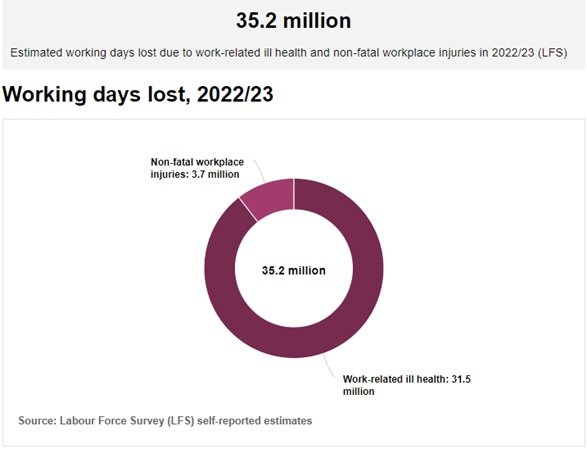
Stress, anxiety and depression accounting for almost 24 million of these. CIPD research shows that employee sickness absence is at the highest level we’ve reported for 15 years and around three-quarters of respondents (76%) report some stress-related absence. Over two-thirds of respondents report that senior leaders take wellbeing seriously.

Employers have a fundamental duty of care for the health, safety and welfare. Most businesses are now stepping up their efforts, more needs to be done to tackle rising rates of sickness absence, presenteeism and the impact of poor mental health. Wellbeing benefits could include life assurance, income protection, critical illness cover or employee assistance programmes (which can support your employees with support around debt counselling, mental wellbeing, bereavement support or redundancy counselling)

Whether you’ve already got schemes in place or you’re starting out in providing employee wellbeing benefits, we can help you with:

Rehobot our smartbot

  • Employee engagement and communication
  • Benefit Design and implementation
  • Cost effectiveness of existing and new arrangements
  • Due diligence on provider selection with detailed examination of policy terms and core package deliver.


Please speak to one of our corporate advisers

I need some help with

Show more options

What Kind of assets do you own?

Select all that apply

Cash Savings

Most people underestimate what they have so it's important to spend a bit of time taking stock. It helps us match you to the right adviser

Pensions

Most people underestimate what they have so it's important to spend a bit of time taking stock. It helps us match you to the right adviser

Stocks, Shares, & Funds

Most people underestimate what they have so it's important to spend a bit of time taking stock. It helps us match you to the right adviser

Investment Properties

Most people underestimate what they have so it's important to spend a bit of time taking stock. It helps us match you to the right adviser

One final Step to getting the help you need

We will email you when we have found your financial adviser.
Cookie Policy

Cookie Policy

Most websites you visit will use cookies in order to improve your user experience by enabling that website to ‘remember’ you, either for the duration of your visit (using a ‘session cookie’) or for repeat visits (using a ‘persistent cookie’).
Some websites will also use cookies to enable them to target their advertising or marketing messages based, for example, on your location and/or browsing habits. Cookies may be set by the website you are visiting (‘first party cookies’) or they may be set by other websites who run content on the page you are viewing (‘third party cookies’).

What is in a cookie?

A cookie is a simple text file that is stored on your computer or mobile device by a website’s server and only that server will be able to retrieve or read the contents of that cookie. Each cookie is unique to your web browser. It will contain some anonymous information such as a unique identifier and the site name and some digits and numbers. It allows a website to remember things like your preferences or what’s in your shopping basket.

Accepting or declining cookies

You can choose to accept or decline cookies. Most web browsers automatically accept cookies, but you can usually modify your browser setting to decline cookies if you prefer. This may prevent you from taking full advantage of the website.

The types of cookies we use

First party cookies
First party cookies are set by the website you are visiting, and they can only be read by that site.

Third party cookies

Third party cookies are set by a different organisation to the owner of the website you are visiting. For example, the website might use a third-party analytics company who will set their own cookie to perform this service. The website you are visiting may also contain content embedded from, for example YouTube or Flickr, and these sites may set their own cookies.
More significantly, a website might use a third-party advertising network to deliver targeted advertising on their website. These may also have the capability to track your browsing across different sites. It is important to note that advertising cookies are not set for UK visitors to the rehowealth.co.uk website.
Rehowealth.co.uk  does use advertising cookies but these will not track your behaviour outside of the  rehowealth.co.uk website and other sites in our network.

Session cookies

Session Cookies are stored only temporarily during a browsing session and are deleted from the user’s device when the browser is closed.

Persistent cookies

This type of cookie is saved on your computer for a fixed period (usually a year or longer) and is not deleted when the browser is closed. Persistent cookies are used where we need to know who you are for more than one browsing session. For example, we use this type of cookie to store your preferences, so that they are remembered for the next visit.