
Is Cash OR Cash Fund a Safe Investment Option?

cash fund

Bank of England have raised interest rate thirteen times since the start of 2022

It is important that savers understand there are many excellent reasons to be holding cash. But just because savings rates are rising does not mean cash is keeping pace with inflation or a better option when compared to equities over the longer term.

Cash funds typically invest in money market instruments, such as treasury bills, deposits, and other short-term liquid assets. Some of these can be lent and borrowed to satisfy the cash flow requirements of banks and other institutions for the short term. Cash fund is a lower risk investment type this doesn’t mean there is no investment risk when compared to that of bank deposit accounts. Cash funds may also contain derivatives that could increase the relative risk factor of the fund and the risks to the investor. Here are some of the differences between cash and a cash fund.
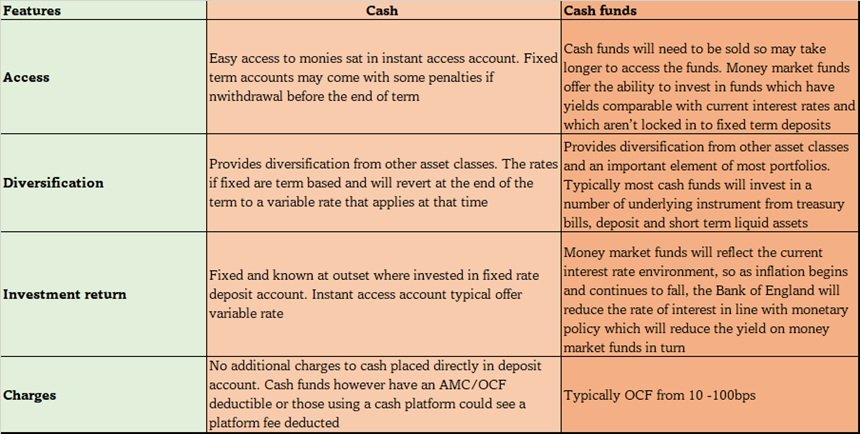
cash v cash fund

Both cash and cash fund have one kryptonite which is “inflation”.  Inflation is a measure of how much the prices of goods (such as food or televisions) and services (such as haircuts or train tickets) have gone up over time. Usually, people measure inflation by comparing the cost of things today with how much they cost a year ago. The average increase in prices is known as the inflation rate. An example on the impact of inflation as of November 2022
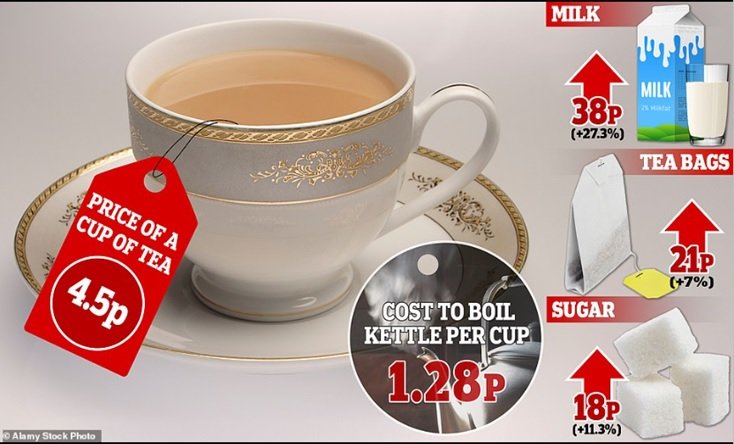
cash fund inflation

With cash earning 5%, why risk money on the stock market? (schroders.com)

UK inflation as of July 2023 is 6.7%. This should be factored in when considering the impact on returns from investing in fixed deposit accounts. Cash deposits and money market instruments provide a low-risk way to produce an income or capital return. They also allow the investor to preserve their nominal value of the amount invested, i.e excluding the effect of inflation. These assets also play a key role in times of market volatility or uncertainty, because they have no underlying market exposure so they are, ordinarily, a low-volatility asset class

Rehobot moments

Do you need help with investing your cash? Speak to one of our financial planner

I need some help with

Show more options

What Kind of assets do you own?

Select all that apply

Cash Savings

Most people underestimate what they have so it's important to spend a bit of time taking stock. It helps us match you to the right adviser

Pensions

Most people underestimate what they have so it's important to spend a bit of time taking stock. It helps us match you to the right adviser

Stocks, Shares, & Funds

Most people underestimate what they have so it's important to spend a bit of time taking stock. It helps us match you to the right adviser

Investment Properties

Most people underestimate what they have so it's important to spend a bit of time taking stock. It helps us match you to the right adviser

One final Step to getting the help you need

We will email you when we have found your financial adviser.
Cookie Policy

Cookie Policy

Most websites you visit will use cookies in order to improve your user experience by enabling that website to ‘remember’ you, either for the duration of your visit (using a ‘session cookie’) or for repeat visits (using a ‘persistent cookie’).
Some websites will also use cookies to enable them to target their advertising or marketing messages based, for example, on your location and/or browsing habits. Cookies may be set by the website you are visiting (‘first party cookies’) or they may be set by other websites who run content on the page you are viewing (‘third party cookies’).

What is in a cookie?

A cookie is a simple text file that is stored on your computer or mobile device by a website’s server and only that server will be able to retrieve or read the contents of that cookie. Each cookie is unique to your web browser. It will contain some anonymous information such as a unique identifier and the site name and some digits and numbers. It allows a website to remember things like your preferences or what’s in your shopping basket.

Accepting or declining cookies

You can choose to accept or decline cookies. Most web browsers automatically accept cookies, but you can usually modify your browser setting to decline cookies if you prefer. This may prevent you from taking full advantage of the website.

The types of cookies we use

First party cookies
First party cookies are set by the website you are visiting, and they can only be read by that site.

Third party cookies

Third party cookies are set by a different organisation to the owner of the website you are visiting. For example, the website might use a third-party analytics company who will set their own cookie to perform this service. The website you are visiting may also contain content embedded from, for example YouTube or Flickr, and these sites may set their own cookies.
More significantly, a website might use a third-party advertising network to deliver targeted advertising on their website. These may also have the capability to track your browsing across different sites. It is important to note that advertising cookies are not set for UK visitors to the rehowealth.co.uk website.
Rehowealth.co.uk  does use advertising cookies but these will not track your behaviour outside of the  rehowealth.co.uk website and other sites in our network.

Session cookies

Session Cookies are stored only temporarily during a browsing session and are deleted from the user’s device when the browser is closed.

Persistent cookies

This type of cookie is saved on your computer for a fixed period (usually a year or longer) and is not deleted when the browser is closed. Persistent cookies are used where we need to know who you are for more than one browsing session. For example, we use this type of cookie to store your preferences, so that they are remembered for the next visit.